Kara Swisher and Scott Galloway Debate Their Money Strategies | Pivot
Ask about Pivot with Kara Swisher and Scott Galloway
Episode Description
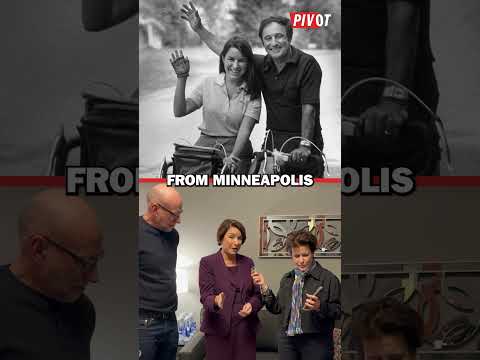
Kara and Scott take questions from listeners about how they manage their money, how to fix the American tax system, and which public policy would help the greatest number of people. Plus…all the audience suggestions for Kara’s next tattoo.
00:00 Intro 00:36 Taxing AI? 4:15 What’s One Policy You Would Implement? 7:23 Investment Strategies 15:45 Advice for Single Parent 23:02 If You Had All the Money in the World… 26:55 Tattoo Talk
Producers: Lara Naaman Zoë Marcus Taylor Griffin Christine Driscoll
Video Producer: Manolo Moreno
Vox Media's Executive Producer of Podcasts: Nishat Kurwa
Send us your questions by calling us at 855-51-PIVOT, or email [email protected]
Read the full transcriptHide the full transcript
- I never let money get in the way of a good time. I'm spending money like a 50s gangster just diagnosed with ass cancer.
- >> Hi everyone, this is Pivot from New York Magazine and the Vox Media Podcast Network. I'm Cara Swisser
- >> and I'm Scott Galloway >> and Scott. This is our end of the year listener mail episode. We're probably
- both elsewhere doing fun things, but are you ready to hear some emails and voicemails from our lovely listeners,
- who by the way, we have a full new appreciation for after meeting so many of them on our Pivot Live tour. I really
- enjoyed that. Are you ready? >> Yeah, ready. >> Okay, Scott, let's kick off with a
- question about taxing AI. Let's listen. >> Hi, this is Lynn. Um, I've been wondering as artificial intelligence
- continues to replace human jobs, do you think we'll ever see attacks on AI itself or on the companies that use it
- as a way to offset its impact on displaced workers? And would that in a sense become a new way of taxing the
- rich? Thank you. Bye. >> Gosh, Lynn, what a great question. Actually, I'm going to start. You know,
- many years ago, Bill Gates sort of set off a kurfuffle when he talked about taxing robots if they become workers um
- the same way because you aren't going to get those money that you get from human
- workers and so they should be taxed in the same way. I hadn't really thought about it about AI. Uh Scott, I I'm I
- think I'm I think you're more qualified to answer this. >> I don't know if that's true. Uh my view
- around taxation is that the moment you start taxing specific industries, you weaponize special interest groups to
- come to their defense and you also create some confusion around like is Oracle AI, you know, if if McKen I mean
- at what point what qualifies as an AI company and not an AI company? Is Microsoft an AI company? What what I'm a
- big fan of and I think that the the the caller is alluding to I want to go back to Reagan era taxation and that is
- there's no difference between I think the capital gains tax deduction is nothing but a transfer of wealth from
- young to old because somehow we've decided that sweat is less noble than money and that is the money I make on
- money gets taxed at a lower rate than the money that young people make on sweat. So I would like to see an elim
- elimination of the capital gains tax deduction and raise those rates to current income and restore a progressive
- tax structure. In my view, you do it across all income and all firms because I think the moment you start getting
- into this notion of let's put a super tax on this type of firm. I think that's I think you regulate them. I think you
- have an EPA, you have an AI act, you have privacy, you have laws, but in terms of taxation, I just think you say,
- look, above a certain level of profitability, when you sell a stock, you pay this much in tax. I think taxes
- need to go up. I think we need to do away. We need to raise long-term capital gains from 21 to 37%. It makes no sense
- that I'm paying lower taxes than people actually working for a living. But I think you apply it to every company
- because a lot of a lot of for example the AI boom is going to make a lot of people in the construction industry very
- very rich. >> It is that's one people group of people that are benefiting. Yeah.
- >> Tax them. Would you tax them? Right. Would you tax >> my out of there's so many loopholes
- right now. The only way we get there is with an AMT. There should be an AMT. Anything above $10 million and anything
- above three million you pay a federal AMT >> of 40%. >> Yep. Because what happens is guys like
- me weaponize the tax code and do 122 and buy assets and we end up paying high teens in tax rates. Yeah.
- >> So the stated the stated we focus too much on tax rates not on the tax code and enough already. There is no reason
- why someone working for money should be taxed at a higher rate than someone who is making money from investments.
- >> Although I don't see any wrong with taxing robots if they're workers. I don't know. I don't
- >> It's an interesting one. >> Yeah. I just I when he said it and I thought, "Oh, Bill Gates." And I
- thought, "Oh, actually he's really smart. I forgot. Anyway, it's an interesting question. We have to deal
- with all these things and what happens with displaced workers and how we're going to pay for that or get them
- different jobs. So, there's going to be a lot of rethinking of all the way the workplace is taxed, how it's conducted,
- what people get paid. Um, and obviously the damage that some of this AI is going
- to do. There's going to have to be some mitigation. Uh, okay, Scott, next question. This one is a tough one. Let's
- listen. >> Hey, Scott and Cara. I'm Liam, a high school senior from New York, and I want
- to ask the following. America certainly has its fair share of economic and social problems, but a lot of the time
- these problems stem from the same root causes. Too often though, our politicians create costly band-aid
- solutions rather than trying to address the underlying issues. So my question to
- you guys is, if you could implement one single policy to try and solve the most problems at once, what would it be?
- Thanks for taking the time to answer. >> Wow, that's a great question. I hate that with just one thing. If I had to
- pick $25 minimum wage. >> I like that. >> Let me explain very quickly because I think it it lists all votes. If people
- get paid more, they'll spend more. It creates a better economy. I know there's initial costs for businesses that have
- these things, but it creates an people that can do a living wage. They spend money. They want to do things. They lean
- into the future. I just it it would be great. The second one would be 8 million houses, more housing. But go ahead. once
- a program, one is structural or legislative. Um, I do think a lot of this reverse engineers to in terms of
- inability to get things done to Citizens United. If I could overturn Citizens United, I would I think a lot of our
- problems stem from the weaponization of Washington by corporate interest and corporate money.
- >> Oh, wow. >> Um, and then >> Wow, Bernie Sanders, I like that answer. >> Well, I mean, it's just true. There's
- more there's more full-time lobbyists living in DC working for Amazon than there are sitting US senators. So, what
- do you know? Anyway, uh but you know, a close second, mandatory national service, universal child care, lower
- Medicare eligibility by two years a year for 10 years until threequarters of America has essentially socialized
- medicine. You know, I could go on and on. >> Yeah, I love it. I love that answer. I
- was not expecting it. Boy, that came out left field there, Scott. All right, Scott, let's take a quick break and
- we'll be back with more listener questions. >> Support for the show comes from Vanguard. To all the financial adviserss
- listening, let's talk about bonds for a minute. Capturing value and fixed income
- is not easy. Bond markets are massive, murky, and let's be real, lots of firms throw a couple flashy funds your way and
- call it a day. But not Vanguard. Vanguard bonds are institutional quality. Institutional quality isn't a
- tagline. It's a commitment to your clients. It means top grade products across the board. The lineup includes
- over 80 bond funds. They're actively managed by a 200 person global squad of sector specialists, analysts, and
- traders. Lots of firms love to highlight their star portfolio managers, like it's
- all about that one brilliant mind making the magic happen. Vanguard's philosophy
- is a little different. They believe the best active strategy shouldn't be locked
- away with one person. They should be shared across the team. That way, every client benefits from the collective
- brain power, not just one individual's take. So, if you're looking to give your clients consistent results year in and
- year out, go see the record for yourself at vanguard.com/audio. That's vanguard.com/audio.
- All investing is subject to risk. Vanguard Marketing Corporation distributor. >> Scott, we're back. The next listener
- wants to know what we're doing with our money. Let's listen. >> Hi, Scott and Kira. It's Eric from
- Brooklyn. Scott, you talk a lot about how you spend, how you invest, and I imagine how you save. Carrie, you don't
- and you come off as maybe a bit more frugal. Can you share a little bit about your investment in spending and saving
- philosophy in the context of your shared success? Um, thank you so much and uh hope we'll see you soon.
- >> Gosh, thanks Eric. A little personal. Um, uh, I am not I don't think about money a lot. That's my problem. I'm not
- interested in it and I make a lot of money. I do. Um, for especially for a journalist, I'm like I'm like Daddy
- Warbucks, a journalist in that regard. But I would say I save a lot. I have a lot of savings and I diversify. I'm sort
- of your basic person, uh, basic [ __ ] of investing. I have bonds. I've got quite
- a bit of real estate that I hold on to. This force savings as Scott calls it. Um, I, um, I don't spend a lot of money.
- I really don't. It's, it has nothing to do with me being frugal. I just don't I'm don't like buying a lot of stuff.
- I'm wearing the same All my clothes I've had for 20. I don't buy a lot of clothes. I don't buy drugs. I don't buy
- I don't go out a lot. Um I'm really boring. >> Don't buy drugs. Where did that come
- from? >> Well, no one here buys drugs. Maybe you I don't buy like I don't drink. I don't
- party. I I'm trying to think like what costs money. I have a Chevy Bolt like and a Kia. So, I don't really care about
- cars. >> You're the primary bread winner in a family of four people. >> Yeah. >> I mean, that in itself is
- >> Y >> Mommy's got to make real money. >> Mommy's got to make real money. And so,
- that's spent on the kids. I definitely get them through college and but I did those savings plans for college for for
- my boys and I'm doing them for my little kids. That worked out really well actually. I didn't have to think about
- it. Um and I did that 20 years ago for my older kids. Um I think I um what I do spend on I have way too much cash
- compared to what I need. But I like to have it. I'm one of those sort of people. I do spend money on a couple of
- things. Um I always will upgrade. I mean I always get first class. I fly well. you know, I don't have a private plane,
- but I I would love to have one, but um I'm sorry to say that people who love the same energy are going to think
- they're wonderful. Um and I I will upgrade all the time, like upgrade hotels and things like that. So, I I've
- gotten I got old very early and then I'm like I didn't want to be in bad food. I
- didn't want to stay in bad places. I suppose if I spend on anything a lot, it's vacations. I really I I do, but I'm
- still more frugal than Scott. Scott is really I really admire Scott's vacation spending. Um I don't know Scott, what do
- you think? >> Well, you know, I think a lot about this. One of my addictions is money and
- that is I continue to be too focused on it to the detriment of my mental health and it takes time away from my family. I
- grew up with a scarcity of money until, you know, I got through my senior college on Top Ramen and bananas. That's
- not an exaggeration. I was in student debt. Um, you know, even at the age of 27, I was traum not
- traumatized, but I had a difficult time paying for my mother's um, uh, healthc care. So, I've been very focused on
- money and got very lucky. And that's not a humble brag. I think I'm a monster. I
- think I'm talented and hardworking, but I did get lucky. And now I am, by most people's standards, wealthy. Uh, my
- approach to spending money is that we don't own money, we rent it. And I also, you collide that with my atheism. You
- know, I believe that this is all coming to an end pretty quickly for me. So, I spend a great deal of money. I spend
- between $3 and $400,000 a month. Uh, I own homes all over the world. I uh have a plane and I spend most of my money on
- homes and experiences and >> not gifts for Cara, just >> but along those lines. The way I try and
- keep in check is I think hoarding money is a virus. When I hit my number eight years ago, I decided anything above that
- number I would give away. And what I do each year is I look at my total spending
- and I match it and I give that amount of money away and it keeps my my net worth
- has not increased in eight years. >> Yeah. >> And uh because I think hoarding wealth
- is a virus. There is no reason anybody needs to be a billionaire. >> But there's no I can't stand it when
- wealthy people can't aren't good at spending money. I have an amazing time. >> Yeah.
- >> I do things for my friends and family to get us all together in the same place. I
- never let money get in the way of a good time. I'm spending money like a 50s gangster just diagnosed with ass cancer.
- >> And >> I think is a nicer way of putting that. Scott is very generous, let's just say,
- to employees. Scott's very generous. >> We don't own money. We rent it. And I'll
- give my kids some money, but there's no reason why my kids need to inherit tens of millions of dollars. So,
- >> I'm going to spend it all on people I love and experiences and take advantage
- of capitalist society. And I'm also going to give a [ __ ] ton of money away to make sure that the things that made
- me rich are still available for younger people. So, I love making money. I love spending it. I stopped making it 8 years
- ago and I anything above a certain level, I give away. In terms of my investments, I'm pretty well
- diversified. My quote unquote investment strategy is the following. I think income inequality, unfortunately, is
- only going to get worse. And what I find is that people worth over hund00 million
- are the most homogeneous, boring people in the world. And that is they all want to party in St. Barts. They all want to
- buy Hermes. They all want to send their kids to elite colleges. And they want to
- live in one of five areas. They want to live in Dubai, London, Palm Beach, New York, or Aspen. And I bought homes in
- all of those places except for Dubai. Big homes. And the way I I refurbish them. And what I tell my contractor and
- my decorator is pretend Jeff Bezos is going to buy this home cuz the world is going to produce thousands of
- billionaires over the next 20 years. And by the way, I think it's a terrible thing about our society. I will vote for
- people to try and reverse that. But the free gift with purchase is at these homes. I want to make it impossible for
- my boys to avoid me. And the conversation when they're say at UC San Diego or something, we can go to Tijana
- with our friends and eat lobsters or we can go to Aspen, but we have to have dinner with my dad. I'm hoping that
- they'll say, "Yeah, let's go hang out with dad." I spend a [ __ ] ton of money. I love it. I give it away. It's not It's
- not virtue. It's not ethics. It makes me feel strong. It makes me feel masculine.
- It makes me feel American. But I'm planning to not increase my net worth. There is no reason anybody needs to be a
- billionaire. It's not going to make you any happier. What's going to make you happier
- >> is doing amazing things with people you love and doing nice things for other people. And I spend to that and I very
- much enjoy it and money is something >> money is something I think a lot about because I didn't have a lot of it
- growing up. >> Yeah. >> Um it's still a very big issue in my life. >> Yeah. It's interesting because I grew up
- with a lot of money and so I guess I don't care. I I've always had money. You think about money less than almost
- anybody I know. >> I know you you get mad at me because I don't I don't I have enough. I had a
- also let me point out my mom was a spend thrift and it upset me and made me both
- my brothers and I are very hard workers and we don't spend a lot of money. All of us are very we like my brother built
- a beautiful house in Pennsylvania where he lives and it's beautiful and he didn't it's it's gorgeous and he loves
- it and so that's what he spends money on and I love that cuz I feel like it was money well spent cuz he enjoys it and
- it's quite beautiful. It's beautiful setting. So we always spend money on homes but not extremely like not like
- ridiculously. Um same thing with Jeff's has a beautiful home. I have beautiful home and
- >> you live well not opulently not at all. No people are surprised. Um, I had the
- luxury of not having to worry about money early in my life, but I there was a lot of my mom being such a spender.
- She was always out of cash and she always had to scrge for it from and trick people getting her dad to write
- her a check. And I found that grotesque. I did. I was like, I'm always going to have enough money. And I had money from
- a very early age cuz my dad died. There was an insurance thing. And I got a hold
- of it when I was 18. And I have not I didn't want my mom near it cuz she was she would she spent a lot of our money
- um that we got from my dad. And so I've had control of my money for years. So I I I just don't care about it enough. I
- just don't I just I I wish I did. Like I I I want my boys to work hard, my older
- boys to work hard, and I think they do. Both of them are really hard workers. And again, just like Scott, they're not
- going to get they're going to get the houses is what they're going to get, which is what which I love the house. So
- it's something like that. All right, Scott, let's get to a question about parenting. Let's listen.
- >> My name's Lisa. I'm the mother of a 17-year-old boy and a 13-year-old girl. Two years ago, their father died
- unexpectedly. Cara, as someone who lost their father and also as someone who's raised
- children without a male partner. And Scott, as someone who's largely raised by a single mother, I'm looking for
- advice. Cara, what do you wish your mom did to keep your dad's memory alive? What did she do right or wrong? Scott,
- what did your mom do right to make you feel like one parent was enough? What do you wish you would have done if, for
- example, she had had more financial resources? Thank you both. >> Man, these are good questions. They're
- highly emotional. God Jesus, >> I don't think my mom did a very good job. I I hate to trash my mom this
- episode, but it's true. You know, she lost contact with my dad's uh parents, and I reestablished it when I was in
- college myself. uh when you're a kid, you're a little bit at cross purposes of loyalty and I I thought that was not
- good. She threw away a lot of pictures um which I recovered some of which I spent a lot of time finding stuff about
- my dad and I have right now have a big box of letters of his that I just read one that was wonderful. Uh um I I think
- she should have spent a lot more time talking about him and and I don't I don't think she remembers herself, but I
- don't think she was kind to his parents. Um so that was one thing is if your grandparents are good people, make sure
- your kids know them and know their relatives on your dad's side and they're his friends. I wish I knew more about my
- dad's friends. And I found out later when I wrote a piece in the Washington Post, I got inundated with friends of
- his that my mother never told me about that I then went and met and all these stories. It was a as I think I've said
- this for there was a gay couple who my dad was lovely to and I didn't know that. I I it was a wonderful thing to
- find out. Uh a young uh African-American woman he tutored wrote me for now she was a doctor and said she wanted to
- thank him. my an ex-girlfriend of his wrote me saying it should have been me uh that married him uh which was funny
- like there's a picture of him behind me. I have a lot of pictures of him around.
- One thing I'm sad is my kids won't know him. I name my and I also name my son after my dad. So that's what I would
- say. >> It's nice. Yeah. I mean there's just thinking about it um stirs emotion. So when I was 15 and in
- California, you were what you drove and or just having a car was everything. You
- had no social life in high school in LA. There was no public transportation unless you had a car. We didn't have a
- lot of money. My mom used to come home uh when I was 15 and a half and honk the horn and we go into a garage of this
- giant apartment complex and she would teach me how to drive stick on her 19 like 77 opal green, you know, lime green
- opal manta. Mhm. >> And then on my 16th birthday, when I passed my driver's test, she came home
- and she had bought this shitty Acura and she put her arms on my shoulders and put
- keys in my hand and said, "You're a handsome young man and you have a car." >> Oh, Scott, you're breaking my heart.
- >> You okay? >> Yeah, I'm good. The The best thing literally I think of any parent or
- mother Um, if you tell your kids every day they have value, they start to believe you.
- >> Yep. 100%. Scott, I bought you an Acura for your >> There you go. >> For Christmas.
- >> That's what I needed. >> Get you out of this. That is a beautiful story. I knew that.
- >> The good news is you become more thoughtful when I reverse engineer all my blessings to two core things. It's
- big government, assisted launch, Pell Grants, University of California, uh DARPA, the internet, uh and also just
- hands down, I think I've always had a base of confidence that that my mother gave me.
- >> Oh my gosh. >> The more the more pragmatic piece of advice is that unfortunately, if you were to reverse
- engineer a young man's problems to a single point of failure, it's when he loses a male role model. And you've had
- your husband has passed. I think it's especially important that you get men involved in your son's life.
- >> Uh Cara, you do a great job. >> I do. I didn't mention that. I have my brothers, both my brothers and friends,
- they have been critically part critical part of my boy's upbringing, my older boy's upbringing, and it'll be the same
- for Saul because he needs a lot of man around him. I agree. Go ahead. >> So, anyways, get Yeah. Get men involved
- in your son's life. What's weird is >> it's not as important for the girl. girls have similar outcomes of college
- attendance and self harm in single parent homes. It ends up that while boys are physically stronger,
- >> they're emotionally and neurologically much weaker than girls. >> So the the involvement of a male role
- model in your son's life is actually now >> I say I miss having my dad. I have to
- every day. One of the last things I would say is um there's a great book called The Loss That is Forever. I
- forget the author. I would recommend reading it. It's forever loss. So don't like pretend it's not like don't under
- don't underscore what the loss is. And I I think about my dad every day, every single day. And you should let them do
- that. And you should think and talk about him every day to them. I mean, I think that's critically important.
- >> All right, Scott, are you okay? Can we move on? >> I'm good. >> All right. It gets worse from here, I
- think. >> Yeah. When Scott dies, he'll be like, you know, you remember like at the end of um
- the Orson Wells movie, Rose Bud. It's gonna be Acura. >> Acura, Acura. >> Opal. >> Opal.
- >> Lime green opal. >> We have an Opal. I love an Opal, but the Opal. We also literally the lamest with
- Navajo print. It was so nice. >> I know. There's a reason I lost my virginity at 19.
- >> P. Well, try having a pacer with Navajo print. Okay. >> Pacer's kind of cool in a weird way,
- though. >> I know, but not then. Okay, Scott. One more quick break. We'll be back and
- we'll answer another listener question. >> Support for the show comes from Ziotics.
- So, I drink a little bit less these days. I'm trying to tone down my consumption of alcohol as I think is a
- good idea when you get to my age 50. But when I do pour myself a cocktail, I want to make sure my next day also feels
- great. Or let me say just to be honest, less bad. And if you want to feel your best in the morning or better in the
- morning, you could start the night before with Ziotics. Ziotics pre-alcohol probiotic drink is the world's first
- genetically engineered probiotic. It was invented by PhD scientists to tackle rough mornings after drinking. And
- according to Ziotics, here's how it works. When you drink, alcohol gets converted into a toxic byproduct in the
- gut. It's this byproduct, not dehydration that's to blame for your rough next day. Pre-alcohol produces an
- enzyme that breaks this byproduct down. Just remember to make pre-alcohol your first drink of the night. Drink
- responsibly and you'll feel your best tomorrow. So, true story. Uh, I did Zbiotics last night because I knew I'd
- have a couple cocktails after my speaking gig last night. So, anyways, go to zbiotics.com/pivot
- to learn more and get 15% off your first order when you use Pivot at checkout. Ziotics is backed with a 100% money back
- guarantee. So, if you're unsatisfied for any reason, they'll refund your money, no questions asked. Remember to head to
- zbiotics.com/pivot and use the code pivot at checkout for 15 bucks off. Okay, Scott. Moving on. This question
- comes from Paul via email. I'll read it. If you had all the money in the world, these are such good questions. Let me
- read this. If you had all the money in the world, what would you be doing with your precious time at this moment with
- that money? And why aren't you doing that? Oh my god, Paul. Wow, Paul, that's a lot. Scott, you go first on this one,
- and I'll I I got to think for a second. >> I'm doing it. I realize how privileged I
- am and I realize this is, you know, a function of my being born a white male heterosexual and, you know, um, I do
- exactly what money had plays. Money as a construct puts no constraints on my life. I am doing exactly what I want to
- be doing every day. Every day I'm I'm blessed and I realize that there's only.1% of the populace can do that. If
- I had billions of dollars and I'd started a private equity firm like >> well what I would be focused on right
- now if I had say hundreds of millions to waste I'm going to spend millions but I
- don't have tens or hundreds of millions. I'm very very focused on restoring some
- of the traditional American values and getting Democrats elected in 26 and 28. >> That's what I do.
- >> Yeah. I would put a take a bunch of money and solidify a progressive not it not not like hateful to conservatives
- but like American values that are about fairness and equity and things like that. So I'd spend money on that. I
- would spend money on um I would I I' I'd do the McKenzie B Scott. That's what I would be. That's what I I just suddenly
- show up with money and not be heard from or seen from again. I would that's how I
- would do what she's doing exactly what she's doing and suddenly give Howard a whole bunch. She's did two gifts to
- Howard and she's all of a sudden she's over at Planned Parenth she's so diverse in her giving um that I I love it and
- it's that's how I would behave. I would um I would also create um uh uh universal daycare. I mean that's what I
- would do for people better child care uh for all kinds of parents. Uh I I would somehow figure out a way to fund like
- right now New Mexico has it because they have all this oil and gas or shale uh money they can do it. Every state we
- should have nationally we should have universal care. That's what I would do. I would spend less on health stuff but I
- couldn't see why. Um again money is I don't spend a lot of money so I wouldn't buy anything. I wouldn't I'm trying
- would I buy anything? Maybe like my own Taylor Swift concert perhaps. That's what I would do. Anything crazy would
- buy. I I might buy invite Scott hurt him hurt his ears. >> You'd be so nice to Taylor Swift.
- Anyway, something like that. Something like that. Someone I enjoy like that. All right, Scott. One more quick break.
- We'll be back with more from our listeners. Support for this show comes from Rubric.
- A lot of companies are deploying AI agents now. They're automating tasks, handling workflows, and making
- decisions. But here's the thing. Sometimes they mess up. What a surprise. They might delete the wrong files, make
- changes you didn't authorize, or just go off script. And when that happens, you're stuck trying to figure out what
- went wrong and how to fix it. Unless you're using Rubric Agent Cloud. Rubric Agent Cloud is a platform that allows
- you to monitor, govern, and rewind AI agent actions. One platform to help you unleash more agents faster without the
- risk. It's running in the background the whole time, watching what's happening, making sure things stay on track, so you
- get full visibility. Set guard rails so agents don't go rogue. And if something breaks, you just roll it back. If your
- business relies on AI agents, you need the ability to monitor, govern, and rewind their actions. Right now, our
- listeners get exclusive early access to Rubric AgentCloud. Head to rubric.com. That's ru ik.com.
- rubric.com. Okay, Scott, we're back and we're ending on something very special. A few weeks
- ago, I asked what tattoo I should get for Scott. ideally on my ass. Let me read some of the answers we got. A roll
- of toilet paper with an S on one of the sheets. The Professor Galloway memorial tattoo should feature an angry but
- dignified daisy duck with a lot of pink shading. Interesting. A penis that cleverly embeds his name on it. Essie on
- one cheek and TT. >> Get the O is the [ __ ] Get it. Get it. Okay. Uh, Groucho nose and glasses
- was Scott's nose and glasses. I don't like any of these. I do like the SCT, I'd say. Uh, I need more. Scott, do you
- have any suggestions? >> Uh, I would get some I would just in case of emergency, call Scott.
- >> Oh my god. Break glass >> or maybe a tiny raccoon holding a beer. >> Oh, I think that's good is what I should
- get. Just the word. >> Um, a barcode. a barcode that if you scan it, it said the problem with Scott
- is >> um you better. >> Yeah. >> Let me see. Uh I don't know. >> I would How about a cat and a dog sort
- of fighting but hugging at the same time? >> Something like that. >> You know, tattoo of a receipt. Total
- 0000 item putting up with >> Cara. Broken halo with the caption Scott tried. >> Acura
- >> uh a fortune cook a fortune cookie and the fortune reads you will tolerate someone named Scott today.
- >> How about one that just says at least he's not Scott Jennings. >> That's right. That's right. No, I think
- there's a lot we could do. I could go on. I'm fine. >> I may get a Scott tattoo. I may just do
- it as a surprise. I think I might maybe I'll get make fake ones made and then trick Scott in some fashion. We have we
- have tattoos of us >> tombstone that says rest in peace Scott's sanity taken by Cara.
- >> These are your tattoos. We have tattoos that we made when we did that conference. The one we didn't make money
- at. This one we did. >> Oh yeah. In the middle of co >> Yeah, we we have tattoos. I'm going to
- find those. There are Scott and Cara tattoos. They were good, actually. Huh. All right, everybody. You got to try
- harder. Come on. Come on. Send more. >> Okay, Scott, that's the show. >> It's time to say goodbye. Thank you
- listeners. And again, I truly and so does Scott appreciate uh you and we were very touched uh by all your questions on
- the tour and we're touched by these questions too and we truly appreciate it because we love our fans. So Scott, read
- us out. >> Today's show was produced by Lauren and Zoe Marcus, Taylor Griffin and Christine
- Driscoll. Bernie engineered this episode. Manila Moreno edited the video. Thanks also to Dubros, Ma and Dan
- Shalon, Nash Kas, Vox Media's executive producer podcast. Make sure to follow Pivot on your favorite podcast platform.
- Thanks for listening to Pivot from New York Magazine and Vox Media. You can subscribe to the magazine nymag.com/pod.
- We'll be back next week for another breakdown of all things tech and business.
Brief Summary
Cara Swisher and Scott Galloway answer listener questions on AI taxation, economic policies, personal finance, and parenting after loss.
Key points
- Taxing AI and Wealth Inequality. A listener questions the taxation of AI and its implications for displaced workers. Scott discusses the need for a progressive tax structure to address wealth inequality.
- Minimum Wage Policy Proposal. Liam, a high school senior, asks for a single policy to solve America's problems. Scott suggests a $25 minimum wage as a solution.
- The Philosophy of Spending. Scott shares his perspective on money, emphasizing the importance of spending on experiences and giving back.
- The Importance of Male Role Models. Discussing the impact of losing a male role model on young boys.
- Reflections on Loss. A heartfelt discussion about the ongoing impact of losing a parent.
- Tattoo Ideas for Scott. A light-hearted segment where listeners suggest funny tattoo ideas for Scott.
Episode highlights
- Taxing AI and Wealth InequalityA listener questions the taxation of AI and its implications for displaced workers. Scott discusses the need for a progressive tax structure to address wealth inequality.“I think taxes need to go up.”2:48Dec 19, 2025
- Minimum Wage Policy ProposalLiam, a high school senior, asks for a single policy to solve America's problems. Scott suggests a $25 minimum wage as a solution.“If I had to pick, $25 minimum wage.”4:50Dec 19, 2025
- The Philosophy of SpendingScott shares his perspective on money, emphasizing the importance of spending on experiences and giving back.“I love making money. I love spending it.”12:20Dec 19, 2025
- The Importance of Male Role ModelsDiscussing the impact of losing a male role model on young boys.“It's especially important that you get men involved in your son's life.”19:51Dec 19, 2025
- Reflections on LossA heartfelt discussion about the ongoing impact of losing a parent.“I think about my dad every day, every single day.”20:53Dec 19, 2025
- Tattoo Ideas for ScottA light-hearted segment where listeners suggest funny tattoo ideas for Scott.“How about one that just says at least he’s not Scott Jennings?”28:37Dec 19, 2025